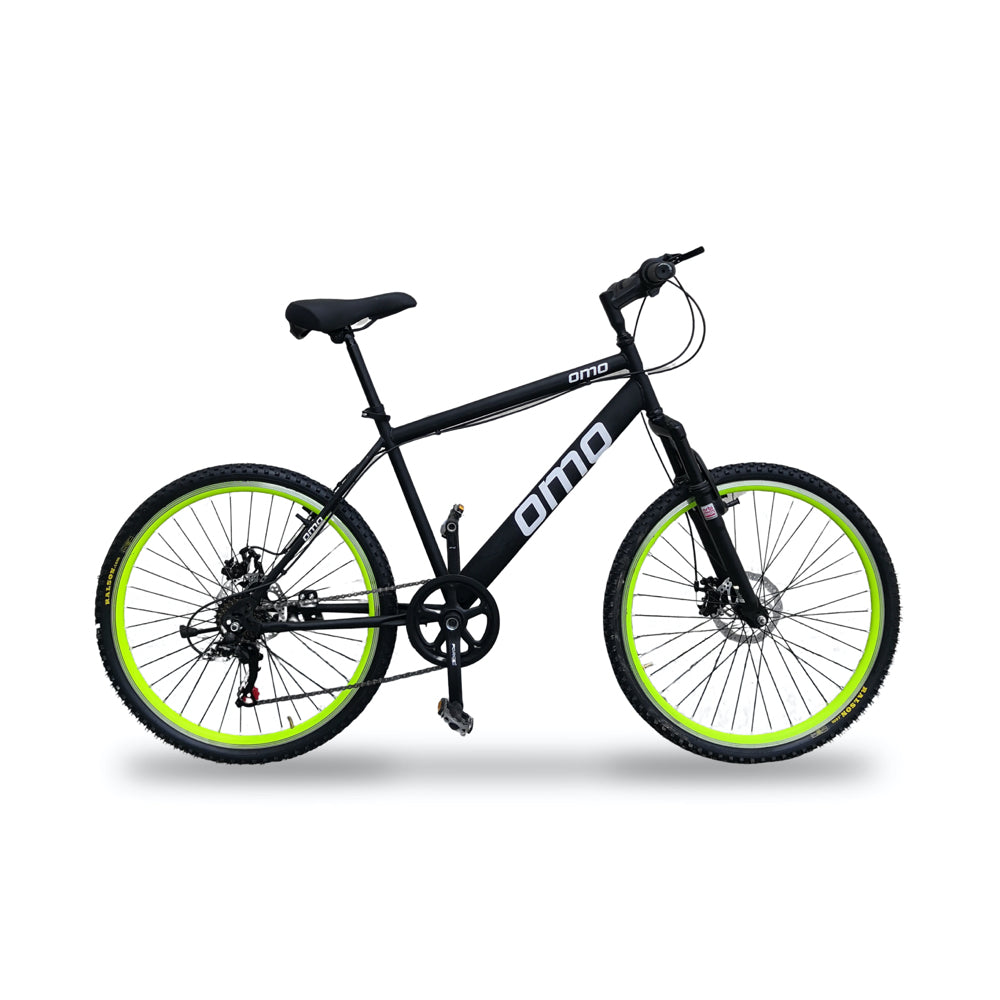

24 Gear Freewheel vs Cassette: The Difference Most Buyers Don't Know
OMO Bikes24 Gears Can Be a Marketing Trap
Many people buying a geared cycle look at just one number — 24 gears.
It sounds simple: more gears must mean a better bicycle. So when you see a ₹15,000 cycle offering 24 gears, it can feel like an amazing deal.
But here is what most buyers don't know: there are two completely different types of 24 gear systems — freewheel and cassette.
Both will have "24 gears" written on the specification sheet. But their actual riding experience, performance, and quality can be very different.
Freewheel vs Cassette Comparison

24 Gear Freewheel Gives You the Number, Not the Performance
Most budget 24 gear cycles in the ₹15,000 range use a 13–28T freewheel.
Now compare that with a proper 24-speed cassette setup, which usually comes with an 11–32T cassette.
What does this mean in real-world riding?
A wider gear range gives you:
-
Easier gears for climbing flyovers, slopes, and hills.
-
Higher gears for riding faster on flat roads.
-
More useful gear options for different terrains.
To understand how small the difference can be, consider a standard 21-speed freewheel bicycle. It usually comes with a 14–28T freewheel.
So when a cycle upgrades from a 21-speed 14–28T freewheel to a 24-speed 13–28T freewheel, you are adding three extra gears, but the overall gear range improves only marginally.
In simple words, you are getting more gears on paper, not a dramatically better riding experience.

A Cassette Is Not Just About More Gear Range
The advantages of a cassette system go far beyond the numbers.
A good cassette drivetrain generally delivers smoother and more precise shifting. It is also usually paired with higher-quality hubs that roll better and offer improved durability.
Freewheel hubs are an older design and can develop side-to-side movement, commonly called wobble, over time. A good cassette hub provides a more stable and refined riding experience.
For riders who cycle regularly, these small differences add up every single day.
Should You Buy a ₹15,000 24 Gear Freewheel Cycle?
A 24-speed freewheel cycle is not necessarily a bad bicycle.
If your budget is limited and you ride occasionally on city roads, it can still do the job.
However, do not buy it thinking you are getting the same experience as a genuine 24-speed cassette bicycle.
A cassette system offers a wider gear range, better shifting quality, stronger hubs, improved reliability, and a more premium riding feel.
OMO Expert Tip
The One Question Every Buyer Should Ask
The next time you compare two 24 gear cycles, do not be impressed by the "24 gears" sticker on the frame.
“Is it a freewheel or a cassette?”
That single answer tells you much more about the quality and performance of a bicycle than the number of gears written on the specification sheet. Because in cycling, the details behind the numbers are what make the real difference.