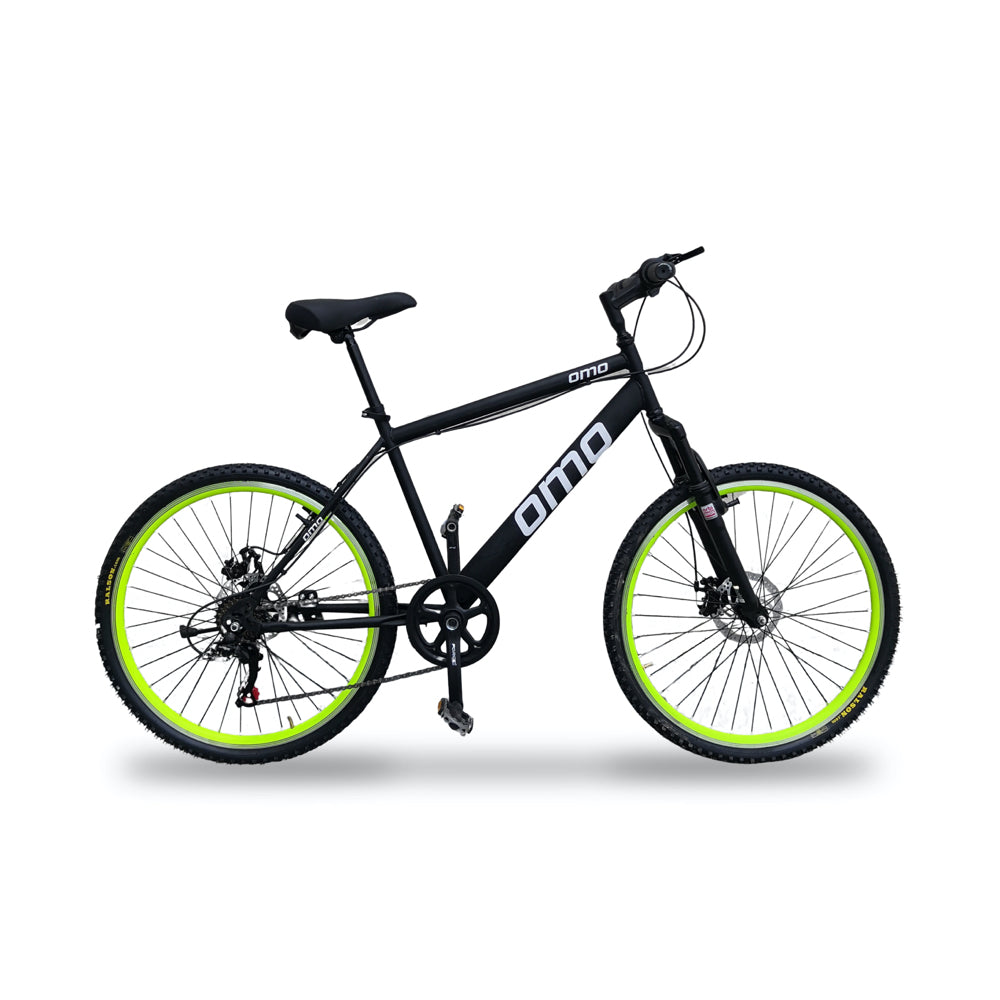

Polygon Cascade 4 vs Trek Marlin 4: Which Mountain Bike Offers Better Value?
OMO BikesShare
Polygon Cascade 4 vs Trek Marlin 4: Which Mountain Bike Offers Better Value?
Choosing a mountain bike is not just about comparing brands or prices. The frame, suspension, brakes, gearing, tyres and overall fit determine how well a bicycle performs on trails, rough roads and everyday rides.
The Polygon Cascade 4 and Trek Marlin 4 are two options worth considering. Both feature aluminium frames, front suspension and hydraulic disc brakes, but their components and sizing options differ.
The Polygon Cascade 4 costs approximately ₹40,000, while the Trek Marlin 4 costs ₹44,500. That's a difference of ₹4,500, or around 11%.
Is the Trek worth the extra money? Let's compare.
Table of Contents
1. Quick Comparison
| Feature | Polygon Cascade 4 | Trek Marlin 4 |
|---|---|---|
| Price | ₹40,000 | ₹44,500 |
| Frame | ALX XC Sport aluminium | Alpha Silver aluminium |
| Suspension | Suntour XCM 32, 100mm | Suntour XCE 28, 80–100mm |
| Brakes | Shimano MT200 hydraulic | Tektro hydraulic |
| Gearing | Shimano CUES 1×9 | Shimano ESSA 1×8 |
| Cassette | 11–46T | 11–45T |
| Chainring | 36T | 30T |
| Wheels | 29-inch | 26, 27.5 or 29-inch, size-dependent |
| Tyres | 29 × 2.25 inches | 2.35–2.40 inches, size-dependent |
| Frame sizes | 4 sizes | 8 sizes |
Specifications and prices are based on latest info taken from their websites. Confirm the exact components and sizes with the seller before purchasing.
2. Frame, Build Quality and Sizes
Both bicycles use aluminium frames designed for cross-country-style riding. However, the frame names alone don't establish which is stronger, lighter or more durable.
One significant advantage for Trek is its wider sizing range. It offers eight frame sizes compared with four for the Polygon Cascade 4.
First-time buyers might consider this a minor difference, but frame size can significantly affect riding comfort, handling and control. A bicycle that's too large or too small can be uncomfortable even if it has excellent components.
Verdict: While both offer Alloy frames, Trek has the advantage in sizing flexibility. Check the geometry and fit before choosing either bicycle.
3. Suspension: Suntour XCM vs XCE
The Polygon Cascade 4 comes with a Suntour XCM 32 fork offering 100mm of travel. The Trek Marlin 4 uses a Suntour XCE 28, with 80–100mm of travel depending on frame size.
Both provide front suspension for absorbing bumps on rough roads and trails. However, suspension performance depends on more than travel alone. Fork design, stiffness, damping and setup also influence the riding experience.
The Polygon's XCM fork is the better suspension in their hierarchy.
One limitation worth noting is that neither bicycle has a suspension lockout, which some riders prefer when climbing or riding on smooth roads.
Verdict: Polygon offers the more attractive suspension specification.
4. Hydraulic Disc Brakes: Shimano vs Tektro
Both bicycles use hydraulic disc brakes, which generally provide better modulation and require less hand effort than basic mechanical disc brakes.
The Polygon uses Shimano MT200 brakes, while the Trek uses Tektro HD-M276/HD-M275 brakes.
Both are suitable systems for recreational riding, and their real-world performance depends on setup, rotor size, pads and maintenance.
One practical advantage of Shimano MT200 is that replacement parts are generally easier to find through bicycle retailers and workshops.
Verdict: Both are capable, but Polygon gets a small practical advantage for replacement-part availability.
5. Gearing: Shimano CUES 1×9 vs ESSA 1×8
The Polygon uses Shimano CUES U4000 components with nine gears at the rear. The Trek uses Shimano ESSA U2000 with eight.
CUES sits above ESSA in Shimano's product positioning, making the Polygon's drivetrain a more appealing component package. It also offers one additional gear and a slightly larger largest sprocket.
However, the front chainring makes a bigger difference to climbing and speed.
The Polygon has a 36-tooth chainring, while the Trek has a 30-tooth chainring.
Their lowest gear ratios are:
- Polygon: 36 ÷ 46 = 0.78
- Trek: 30 ÷ 45 = 0.67
The Trek's lowest gear is approximately 14% easier to pedal, making it better suited to steep climbs.
At the other end, their highest gear ratios are:
- Polygon: 36 ÷ 11 = 3.27
- Trek: 30 ÷ 11 = 2.73
The Polygon's highest gear is approximately 20% higher, making it better suited to maintaining speed on flat roads and gentle descents.
Verdict: Polygon has the better drivetrain specification and gives balanced gearing for faster riding & inclines both. Trek has the advantage for steep climbing.
6. Wheels and Tyres
The Polygon comes with 29-inch wheels and 2.25-inch tyres. Trek offers different wheel sizes according to frame size, with tyres ranging from 2.35 to 2.40 inches wide.
Wider tyres can provide additional cushioning and traction, depending on tyre pressure, tread and terrain. However, they may also create more rolling resistance in some conditions.
The Polygon's slightly narrower tyres offer a sensible balance for mixed use, including city roads and trails. Trek's wider tyres may appeal to riders who prioritise cushioning and grip on rougher surfaces.
Wheel size also matters. Larger wheels generally roll over obstacles more easily, while smaller wheels can be appropriate for shorter riders and smaller frames.
Verdict: Polygon suits mixed city and trail riding well, while Trek's wider tyres favour riders who want additional cushioning and traction.
7. Cockpit, Saddle and Comfort
The Polygon uses a 700mm handlebar and a 40mm stem. Trek offers size-specific handlebars ranging from 690mm to 750mm and stems from 35mm to 70mm.
Both bicycles have good-quality components in areas such as the saddle, seat post and pedals for their category. Saddle comfort, however, is personal and depends on the rider.
Trek's size-specific cockpit components are a thoughtful touch. Different handlebar widths and stem lengths can help accommodate different rider proportions and frame sizes.
Verdict: Trek has an advantage in cockpit customisation across its size range.
8. Which Bicycle Offers Better Value for Money?
At ₹40,000, the Polygon Cascade 4 offers an attractive component package for the price. Its Shimano CUES drivetrain, Suntour XCM 32 fork and Shimano MT200 brakes are its main advantages.
The Trek Marlin 4 costs ₹4,500 more, but that additional amount buys a wider choice of frame sizes, size-specific cockpit components, wider tyres and easier climbing gears.
Here's the simple breakdown:
- Better component value: Polygon Cascade 4
- Better sizing flexibility: Trek Marlin 4
- Better for steep climbs: Trek Marlin 4
- Better for higher speeds on flat roads: Polygon Cascade 4
- Better overall value on specifications and price: Polygon Cascade 4
Neither bicycle is automatically better for every rider. A good fit can matter more than a difference in drivetrain or suspension specifications.
9. Final Verdict
Based on the supplied specifications and prices, the Polygon Cascade 4 is my pick for component value. It costs less while offering an appealing drivetrain, suspension fork and braking package.
The Trek Marlin 4 is worth considering if its wider sizing range helps you find a better fit. Its easier climbing gears and size-specific cockpit components are also meaningful advantages.
My recommendation is simple: choose the Polygon if you want stronger specifications for your money and its frame fits you well. Choose the Trek if it provides a noticeably better fit or better suits your climbing needs.
Ultimately, the best mountain bike isn't necessarily the one with the most gears or the biggest brand name. It's the one that fits you comfortably, suits your terrain and makes you want to ride more often.
```html
10. Complete Specifications Comparison
Here is a detailed, component-by-component comparison of the Polygon Cascade 4 and Trek Marlin 4.
| Specification | POLYGON | Trek |
|---|---|---|
| Brand | Polygon | Trek |
| Model | Cascade 4 | Marlin 4 |
| MAIN FEATURES | ||
| Price (₹) | 40,000 | 44,500 |
| Frame | ALX XC SPORT FRAME, Aluminium | Alpha Silver Aluminium |
| Fork | SUNTOUR XCM 32, 100mm Travel, Aluminium | SR Suntour XCM 30 / XCE 28, coil spring, 80–100mm travel (size-specific) |
| Brakes | Hydraulic Disc Brake - MT200 | Hydraulic Disc Brakes: Tektro HD-M276 / HD-M275, Power BH-M286TF |
| Wheels | 29", Alloy Double Wall | Bontrager Connection, double-wall, 32-hole |
| Gears | 1×9 | 1×8 |
| GEARS | ||
| RD (Rear Derailleur) | Shimano CUES RD-U4000GS | Shimano ESSA U2000 |
| FD (Front Derailleur) | — | — |
| Shifters R | Shimano CUES SL-U4010, 1×9 Rapid Fire | Shimano M315, 8-Speed |
| Shifters L | — | — |
| DRIVE TRAIN | ||
| FW / CS (Cassette) | Shimano CUES CS-LG300, 11–46T | Shimano HG300, 11–45T, 8-Speed Cassette |
| Chain | KMC X-GLIDE | KMC Z8.3, 8-Speed |
| Crank | PROWHEEL C10Y-NW, 36T | ProWheel Alloy, 30T (160 / 170 / 175mm, size-specific) |
| Bottom Bracket (BB) | Square BB, 68mm | Threaded Cartridge |
| WHEELS | ||
| Rim | Alloy Double Wall | Bontrager Connection, Double-Wall, 32-Hole, 20mm Width |
| Hubs | — | Formula DC-20 Front / DC-22 Rear, 6-Bolt, QR |
| Tyre / Tube | 29" × 2.25" | Bontrager Montrose Comp, 26 × 2.35" (XXS), 27.5 × 2.40" (XS/S), 29 × 2.40" (M–XXL) |
| COCKPIT & COMFORT | ||
| Handlebar | POLYGON SPORT, 700mm, 31.8mm, R/D: 20mm | Bontrager Alloy, 690mm (XXS/XS), 720mm (S), 750mm (M–XXL) |
| Stem | POLYGON SPORT, 40mm, 31.8mm, R/D: 7 | Bontrager Comp, 35mm (XXS–S), 50mm (M–L), 60mm (XL), 70mm (XXL) |
| Grip | — | Trek Line Comp, Nylon Lock-On |
| Seat | Black Steel, ø7mm | Bontrager Verse Short, Stainless Steel Rails |
| Seat Post | POLYGON SPORT, 27.2 × 350mm | Bontrager Alloy, 31.6mm, 300mm (XXS), 330mm (XS–M), 400mm (ML–XXL) |
| Pedals | One Piece PP Body | Nylon Platform |
| Headset | Semi-Integrated, 1-1/8" | Semi-Integrated, 1-1/8" |
Note: Specifications may vary by model year, market and frame size. Please verify the details with the manufacturer or authorised seller before purchasing.
```