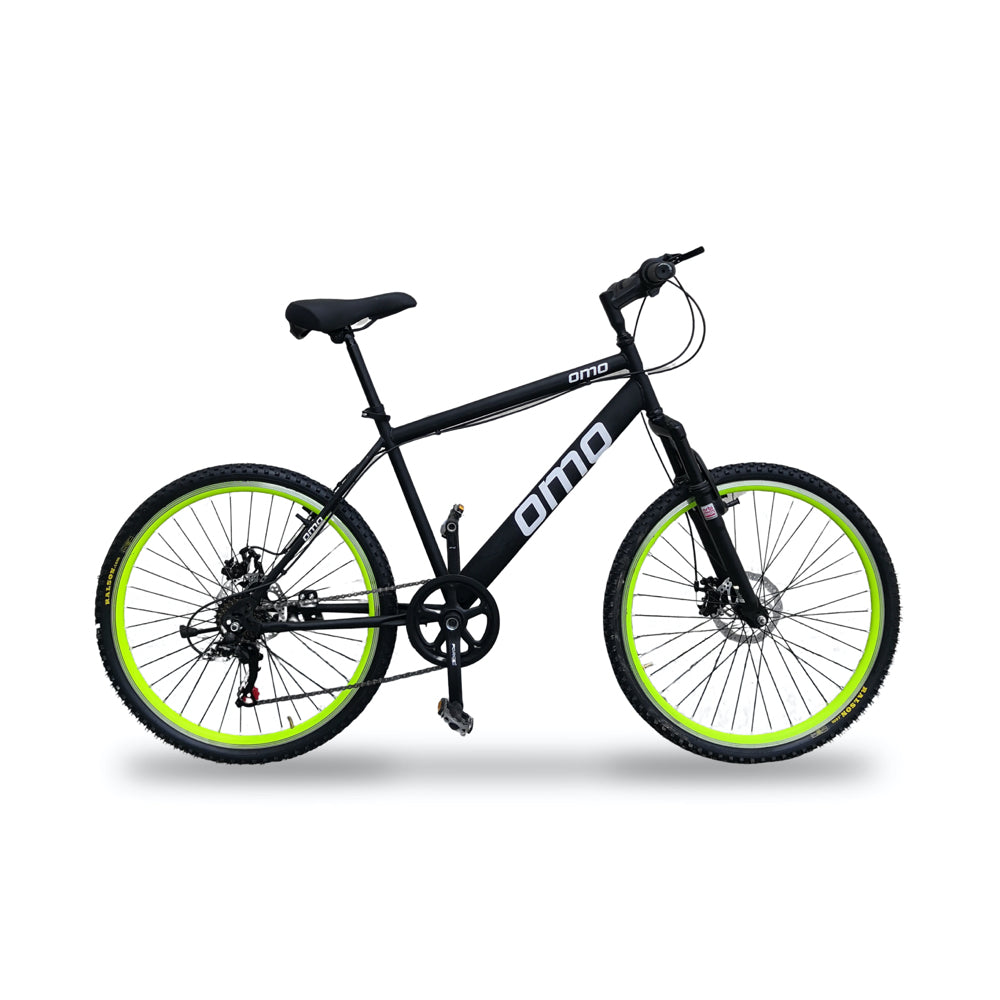

Bicycle with Suspension: Types, Benefits, Price & Buying Guide
OMO BikesShare
There are different types of bicycle suspension. A front suspension bicycle has suspension only at the front, while a dual suspension bicycle or full suspension bike has suspension at both the front and rear.
But does every bicycle need suspension? Not necessarily.
For city riding and fitness riding, a good front suspension bicycle is usually enough. Full suspension is more useful for rough trails, mountain biking and very uneven roads.
What Is Bicycle Suspension?
Bicycle suspension is a system designed to absorb shocks and reduce the impact of uneven surfaces on the rider and bicycle.
The most common type is front suspension, where a suspension fork is fitted to the front wheel. When the front wheel hits a pothole or bump, the fork compresses and absorbs some of the impact.
A bicycle can also have rear suspension. In this setup, a rear shock absorber is fitted between the frame and rear wheel. When both front and rear suspension are present, the bicycle is called a dual suspension bike or full suspension bike.
In simple terms:
- Rigid bicycle: No suspension
- Front suspension bicycle: Suspension at the front (Hardtail)
-
Dual / Full suspension bicycle: Suspension at the front and rear
Suspension improves comfort and control, but it also adds weight, cost and maintenance.
If you are looking specifically for bicycle suspension components, you can browse the OMO Bikes suspension and rigid fork collection .
Types of Bicycle Suspension
There are three main setups you will find on bicycles.
1. Front Suspension
A front suspension bicycle has a suspension fork at the front.
This is the most common type of suspension found on hybrid bicycles, MTB cycles and recreational bicycles.
A front suspension bike is useful when you regularly ride on:
- Broken city roads
- Potholes
- Gravel
- Uneven roads
- Light trails
- Rough village roads
For most everyday riders, front suspension offers a good balance between comfort, weight and price.
2. Dual Suspension or Full Suspension
A dual suspension bicycle has both front and rear suspension.
The front suspension absorbs impacts from the front wheel, while the rear shock absorbs impacts from the rear wheel.
This is also called a full suspension bicycle or full suspension bike.
Full suspension is particularly useful for mountain biking and rough trails where the bicycle regularly travels over rocks, roots, drops and other obstacles.
The downside is that full suspension bicycles are generally:
- Heavier
- More expensive
- More complicated
- More expensive to maintain
For normal city riding, a full suspension bike is usually unnecessary.
3. Rigid Bicycle
A rigid bicycle does not have suspension.
Instead, the frame and fork are rigid, and the tyres provide most of the cushioning.
Rigid bicycles can be lighter and more efficient than suspension bicycles. They are especially suitable for smooth roads, road cycling and fitness riding.
If you mostly ride on good roads, you may not need suspension at all.
Front Suspension vs Dual Suspension
The right choice depends mainly on where you ride.
| Feature | Front Suspension | Dual / Full Suspension |
|---|---|---|
| Front bumps | Good | Excellent |
| Rear bumps | Limited | Excellent |
| Comfort | Good | Very good |
| Weight | Lower | Higher |
| Efficiency | Better | Lower |
| Maintenance | Lower | Higher |
| Best for | City, fitness, light trails | Rough trails, MTB |
What Is a Bicycle Shock Absorber?
A bicycle shock absorber is a component that controls the movement of the suspension.
People commonly search for terms such as bike shock, cycle shock absorber, bike shock absorber and even cycle shocker. These generally refer to components used to absorb and control impacts.
The front suspension is usually built into the suspension fork. Rear suspension systems use a separate shock absorber.
The suspension system generally has two important jobs:
- Absorb the impact
- Control how quickly the suspension moves back
This is why simply having a suspension fork does not automatically mean that a bicycle has good suspension.
A very basic suspension fork may add weight without providing much useful performance.
Spring vs Air Suspension
Suspension systems can use different methods to support the rider and absorb impacts.
Spring Suspension
Spring suspension uses a metal coil spring inside the fork or shock.
It is generally:
- Simple
- Affordable
- Durable
- Easy to maintain
Spring suspension is common on affordable and entry-level bicycles.
For everyday city riding, a good spring suspension fork can work perfectly well.
Air Suspension
An air suspension bicycle uses compressed air instead of a traditional metal coil as the main spring.
Air suspension is generally:
- Lighter
- More adjustable
- More expensive
- Better suited to performance riding
The rider can often adjust the air pressure according to their weight and riding requirements.
Air suspension is more common on higher-end mountain bikes and suspension forks.
What Is Hydraulic Suspension?
The word "hydraulic" is often used when talking about bicycle suspension, but it is important to understand what it means.
Hydraulic or oil damping is used to control the movement of the suspension. It can make the suspension movement smoother and more controlled.
A suspension system can therefore have an air or spring system for support, combined with oil-based damping for control.
Better damping becomes especially useful when riding quickly over rough terrain.
For normal city riding, you do not necessarily need an expensive hydraulic suspension system.
What Is Lockout Suspension?
A lockout suspension fork allows the rider to reduce or stop the movement of the suspension when riding on smooth roads.
This can be useful because suspension movement can waste some pedalling energy.
For example, you may want the suspension to work when riding over potholes or rough roads, but keep it locked when riding on a smooth road.
If you regularly switch between smooth roads and rough roads, a suspension fork with lockout can be a useful feature.
Benefits of a Bicycle With Suspension
1. Better Comfort
Suspension reduces some of the impact reaching your hands, arms and body. This is particularly noticeable on broken roads.
2. Better Control
A suspension fork helps the front wheel stay in contact with the road when riding over uneven surfaces. This can improve control and confidence.
3. Better Grip on Rough Surfaces
When the wheel can move over bumps instead of bouncing off them, the tyre can maintain better contact with the ground. This is particularly useful during off-road riding.
4. More Comfortable Long Rides
On rough roads, continuous bumps can become tiring. A suitable suspension system can make longer rides more comfortable.
5. Useful for Indian Roads
Many Indian roads have potholes, speed breakers and uneven surfaces. A front suspension bicycle can be useful for riders who regularly encounter these conditions.
However, suspension is not a replacement for good tyres. Tyre width and tyre pressure also have a major effect on comfort.
Do You Need a Suspension Bicycle?
This depends on how and where you ride.
Choose suspension if:
- You regularly ride on broken roads
- Your routes have potholes
- You ride on gravel or rough surfaces
- You want more comfort
- You occasionally ride on light trails
You may not need suspension if:
- You mostly ride on smooth roads
- You want a lightweight bicycle
- You mainly ride for fitness
- You want maximum pedalling efficiency
- You mostly ride on paved roads
For many riders, a front suspension bicycle is the best middle ground.
You get additional comfort without the extra weight and complexity of a full suspension system.
Suspension Bicycles Under ₹10,000
If your budget is limited, you can still find bicycles with suspension for everyday riding.
At this price range, the focus should be on getting a reliable overall bicycle rather than expecting advanced suspension performance.
Explore bicycles with suspension under ₹10,000 to compare available options.
For basic city riding, a simple spring suspension fork can be sufficient. Just remember that suspension quality, tyres, brakes and the overall bicycle build are all important.
Suspension Bicycles Under ₹20,000
With a budget of around ₹20,000, you have more options and can look for better components, gears, brakes and suspension systems.
For riders looking for a bicycle for everyday commuting, fitness riding and rougher roads, this can be a useful price range to consider.
Browse bicycles with suspension under ₹20,000 and compare different configurations.
Gear Bicycles With Suspension
A gear bicycle with suspension combines a suspension fork with multiple gears.
This can be useful if your routes include a mixture of flat roads, flyovers, slopes and rough surfaces.
The gears help you manage different gradients, while the suspension improves comfort on uneven roads.
However, gears and suspension solve different problems. More gears do not make suspension better, and suspension does not make a bicycle easier to pedal uphill.
If you are specifically looking for geared bicycles with suspension , you can explore the available options.
How Much Does Bicycle Suspension Cost?
The bicycle suspension price depends heavily on the quality and type of suspension.
| Type | Approximate Price |
|---|---|
| Basic suspension fork | ₹1,000–₹3,000 |
| Better recreational fork | ₹3,000–₹4,000 |
| Air suspension fork | ₹6,000–₹15,000+ |
| Complete full suspension bicycle | ₹20,000+ |
These are broad indicative ranges. The actual price depends on the brand, materials, travel, damping system and other bicycle components.
Also remember that the price of a bicycle front shock absorber is very different from the price of a complete suspension bicycle.
A cheap suspension fork may look attractive, but suspension quality matters more than simply having "suspension" written in the specifications.
How to Choose the Best Suspension Bicycle
There is no single best suspension bicycle for everyone. Instead, choose based on your riding conditions.
1. Consider Where You Ride
For city roads and occasional rough roads, front suspension is generally sufficient.
For serious mountain biking, consider a full suspension mountain bike.
2. Look at Suspension Quality
Do not judge a bicycle only by whether it has suspension.
A good suspension fork should move smoothly and provide useful damping and control.
3. Consider Lockout
If you ride on both smooth and rough roads, a lockout can be useful.
You can use the suspension on rough surfaces and reduce its movement on smooth roads.
4. Check the Tyres
Tyres have a major effect on comfort.
Wider tyres at an appropriate pressure can absorb small bumps and improve grip, even on a bicycle without expensive suspension.
5. Consider Weight
Suspension adds weight.
If you mainly ride on smooth roads, a lighter rigid bicycle may actually be faster and more enjoyable.
6. Think About Maintenance
Front suspension is relatively simple.
Full suspension has additional moving parts, bearings and a rear shock. It therefore needs more maintenance.
Is Full Suspension Better Than Front Suspension?
Not always.
A full suspension bike is better when the terrain demands it.
On rough mountain trails, rear suspension can provide significantly better comfort, traction and control.
But on normal roads, the additional weight and movement may not provide enough benefit to justify the higher price.
For an everyday bicycle, front suspension is often the more practical option.
Frequently Asked Questions
Is a bicycle with suspension better?
It depends on where you ride. Suspension is useful on rough and uneven roads, but it is not necessary for smooth roads.
What is the difference between front and dual suspension?
A front suspension bicycle has suspension only at the front. A dual suspension bicycle has suspension at both the front and rear.
Is a full suspension bicycle good for city riding?
It can be comfortable, but it is often unnecessary. A front suspension bicycle is usually lighter, simpler and more efficient for city riding.
What is an air suspension bicycle?
An air suspension bicycle uses compressed air as the main spring in the suspension system. It is generally lighter and more adjustable than basic spring suspension.
How much does bicycle suspension cost?
Basic suspension forks can start around ₹1,000–₹3,000, while better air suspension forks can cost ₹6,000 or more. Complete suspension bicycles cost considerably more.
What is a bicycle shock absorber?
A bicycle shock absorber controls the movement of the suspension and helps absorb and manage impacts from rough surfaces.
Is suspension necessary for a hybrid bicycle?
Not necessarily. If you ride mostly on smooth roads, a rigid hybrid can be a good choice. If your roads are rough, front suspension can improve comfort.
Is a suspension bicycle good for Indian roads?
Yes, particularly if you regularly ride on potholes, broken roads and uneven surfaces. However, tyres, tyre pressure and bicycle geometry are also important for comfort.
Final Verdict
A bicycle with suspension can make rough-road riding more comfortable and controlled, but more suspension does not always mean a better bicycle.
For everyday city and fitness riding, front suspension is usually the most practical choice. It provides useful comfort while keeping weight, price and maintenance under control.
A dual suspension or full suspension bike makes more sense for serious off-road and mountain biking, where both wheels regularly encounter large bumps and obstacles.
Before buying, look beyond the word "suspension". Consider the suspension quality, tyres, bicycle weight, lockout, riding conditions and overall component quality.
The best suspension bicycle is not necessarily the one with the most suspension. It is the one that matches where, how and how often you ride.